
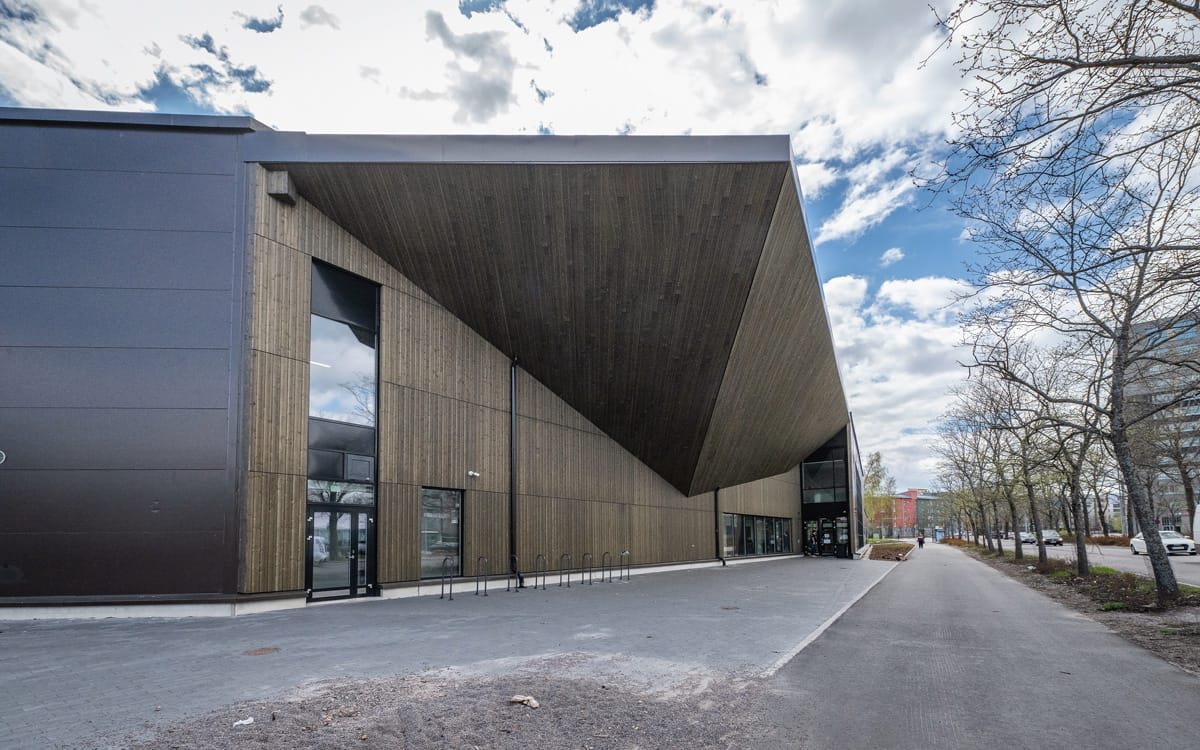

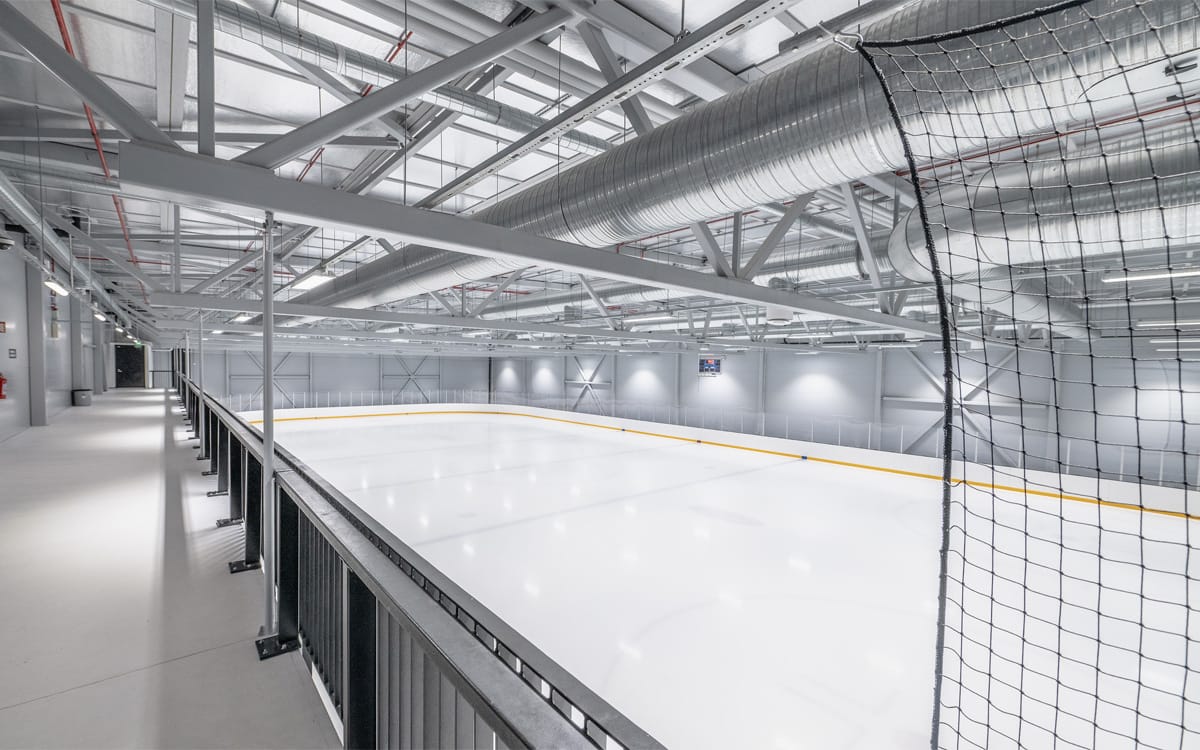
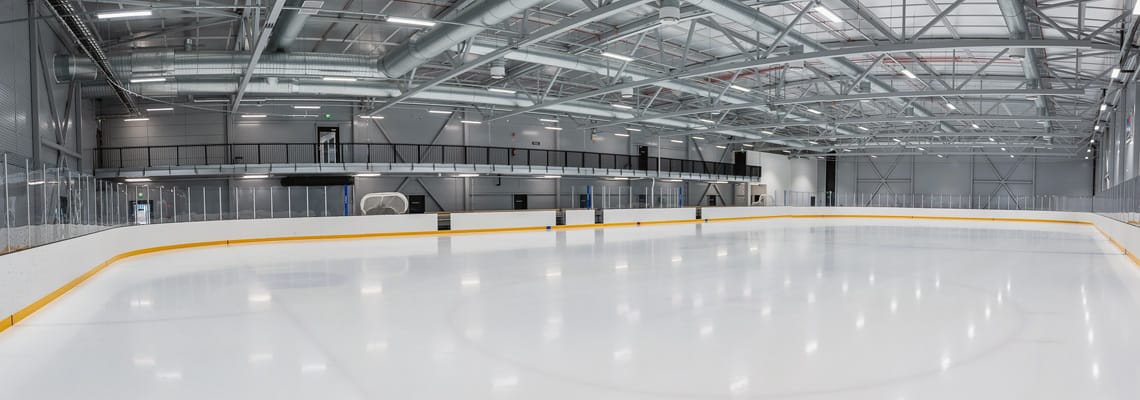
The Herttoniemen jäähalli ice rink is an important part of Helsinki’s sports services, serving both amateurs and competitive athletes. The new practice ice rink offers versatile facilities for both recreational and competitive ice sports. The facility is open year-round.
The Herttoniemen jäähalli is referred to as a dual-rink practice facility, featuring two ice hockey rinks, as well as approximately 500 square meters of other exercise spaces. Bleachers are situated along the long sides of the rinks. There are no designated spectator seating areas in the hall, as its primary purpose is for practice only. Therefore, the ice rink is not expected to accommodate large audiences. The building’s fire class (P2) restricts the maximum allowed capacity of the entire hall to 500 people, therefore it will also not be used for organizing trade fairs or sales events.
The spaces designated for ice sports are located on the first floor of the two-story building, while the second floor houses local exercise facilities such as gyms. In addition, the complex naturally includes dressing rooms, showers, restroom facilities, equipment storage, maintenance services, and other facilities typical of an ice rink. All spaces and functions of the ice rink have been designed with accessibility in mind, ensuring easy access for people with disabilities. The ice rink also houses a café.
The Herttoniemen jäähalli ice rink was built in a central location within an established urban environment. The Linnanrakentajantie road runs along the western side of the ice rink plot, intersecting with Abraham Wetterin tie at the northwest corner of the plot. On the southern edge of the plot lies Herttoniemen kartano manor with its landscaped gardens and buildings, notably the steward’s cottage built in the 1700s, now home to the popular restaurant Ravintola Wanha Mylly. The manor park is considered one of the finest park areas in the country, with its protected buildings, avenues, and plantings, ranking among Helsinki’s most valuable park landscapes.
Herttoniemen jäähalli is of particular interest to top-level ice hockey enthusiasts because hockey team Jokerit practices there. There are no actual league matches held in the rink, as it is primarily designed for practice purposes. Jokerit plays most of its home games at Kerava Ice Rink, and some also at Helsinki Ice Rink.
On weekdays, the ice rink’s booking schedule is nearly full with Jokerit’s slots, but there is room for other teams for evening ice time as well. Figure skating in the rink is practiced by, among others, Helsinki Figure Skating Club and HSK Helsingfors Skridskoklubb, known in Finnish as Helsingin Luistinklubi ry.
We completed the fire engineering design for the building permit phase and the smoke extraction design for the implementation phase of the Herttoniemen jäähalli. Additionally, we provided fire engineering expert opinions regarding the façade structures and the fire safety of the roof elements in the cold ice hockey rink areas of the building. The building was designed for ice sports use and implemented with fire class P0 (P2), as its fire safety design was largely based on performance-based fire safety design.
In performance-based fire safety design, the building is designed to withstand likely fire scenarios and ensure safe evacuation for occupants. Performance-based fire engineering allows for deviations from traditional preset fire classes and numerical values, which often lead to unnecessarily robust structural solutions, especially in buildings equipped with sprinklers. Because some areas of the ice rink were equipped with a sprinkler system, its impact was considered in the performance-based fire engineering.
Through performance-based fire engineering, we examined exceeding the maximum allowed occupancy (evacuation simulation of the bleachers), exceeding the maximum compartment area of fire compartments, implementing load-bearing steel structures without fire protection, compliance of glass partition structures, and exceeding the maximum building height. Performance-based fire safety engineering significantly reduced the construction costs and carbon footprint of the ice rink by allowing for lighter wall structures and reducing the number of fire doors and fire compartments. Most importantly, it achieved a safer outcome by replacing fire compartments with an automatic extinguishing system.
The construction project of the 7,000 square meter Herttoniemen jäähalli training ice rink took place between 2020 and 2023. The estimated cost of the project was approximately 1 million euros. Construction of the ice rink began in March 2021 and was completed in September 2023. The project was commissioned by Jääkenttäsäätiö sr., constructed by VRJ Etelä-Suomi Oy, and designed by architect Vesa-Jukka Vuorela from DAT Arkkitehdit Oy.
The Herttoniemi Ice Rink was constructed in the midst of an established urban environment. The rink is centrally located in Helsinki near Herttoniemi Metro Station, making it easily accessible by both public transportation and car. It’s approximately a kilometer from Herttoniemi Metro Station to the ice rink, and there are several bus stops nearby. Visitors can explore the interior of the rink, even wearing their own skates! Free public skating is available every Tuesday afternoon and Sunday morning.
The architecturally magnificent Katajanokan Laituri is located in an important and traditional place for the people of Helsinki. After all, Katajanokka in Helsinki has hundreds of years of history behind it. The new office building is located in a maritime environment a short distance from Stora Enso’s former headquarters, the building known in Finland as Alvar Aalto’s “sokeripala” (the Finnish word means “sugar cube”). The South Harbour’s sea spa Allas Sea Pool and Helsinki’s famous market square Kauppatori are located nearby.
The finished building contains approximately 16,000 square meters of office space for rent to companies and service providers, as well as public spaces open to the public, which will serve as a meeting place for city dwellers, tourists and service providers who enjoy the seaside location in one of Helsinki’s finest neighborhoods.
Katajanokan Laituri will be, not only a significant trendsetter for wood construction in the urban environment, but also a modern and progressive office building aiming for carbon neutrality. The energy consumed in building will be produced entirely with renewable energy sources. Minimizing the climate effects of the building during its entire life cycle is one of the main goals of the project. After the building is completed, it will be applied for the LEED Platinum green building certificate, which broadly takes into account responsibility aspects.
The visible wooden surfaces, the personalized design of the building, and the massiveness of the wooden structures are, of course, central parts of the architecture and identity of Katajanokan Laituri. However, the use of climate-responsibly grown and renewable solid wood also makes Katajanokan Laituri a significant and long-term carbon storage solution. The building is made to last at least a hundred years and store carbon for the lifetime of its wooden structures. According to calculations, the structures bind up to 5,865 tons of carbon dioxide, which is roughly equivalent to the annual emissions of 3,500 passenger cars.
The project utilizes Stora Enso’s Sylva™ wood-based products for low-carbon buildings, which consists of prefabricated building elements according to dimensions. The finished wooden frame contains 7,600 cubic meters of solid wood supplied by Stora Enso. Of this, approximately 6,000 m³ is cross-laminated timber (CLT) produced at the company’s Gruvön factory in Sweden, and 1,600 m³ is veneered timber (LVL) produced by the company’s Varkaus factories. Veneered wood is used as the load-bearing frame of the building, while CLT is used as the load-bearing structure of the building’s stiffening inner walls, elevator and stair shafts, stairs, and intermediate floors and top floor. A similar wooden frame cannot be found anywhere else in the world. The building is mainly finished with a glass facade.
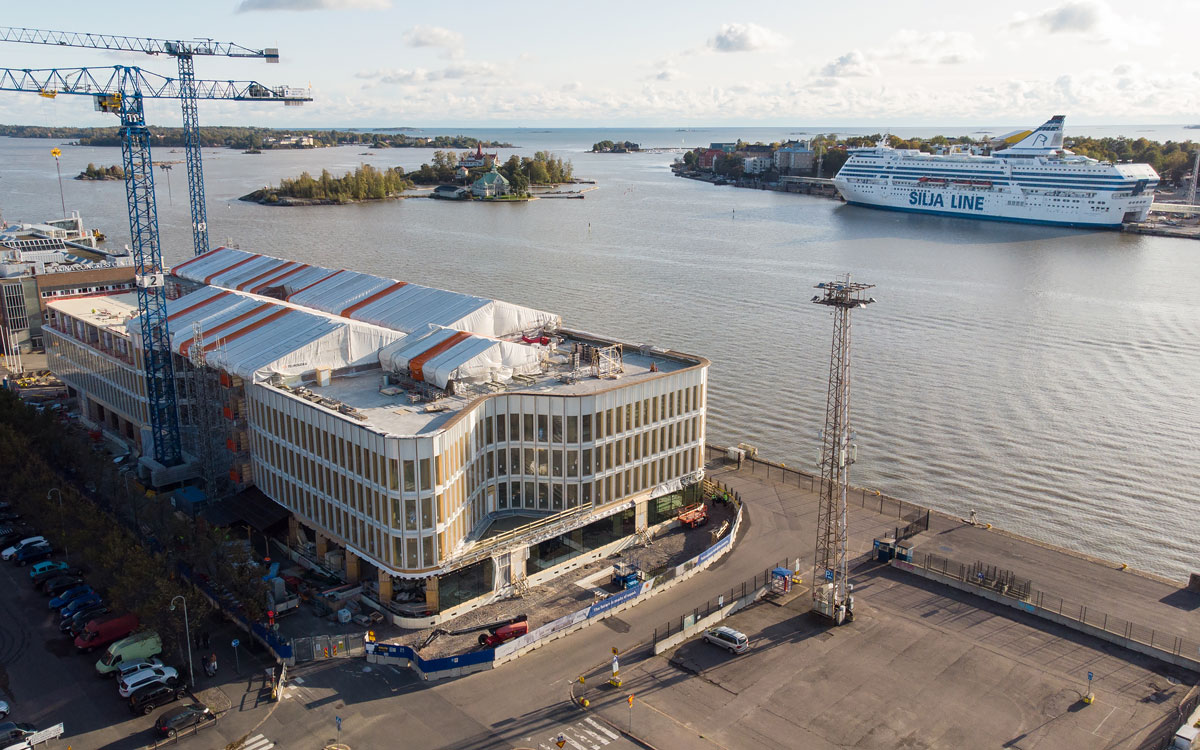
KK-Palokonsultti Oy has carried out the fire engineering design of the Katajanokan Laituri and prepared numerous site-specific expert opinions and various reports on the project. The effect of the central hall’s solid wood lamellas on the spread of fire and smoke was investigated using fire simulations in order to ensure the safety of using wooden surfaces. The total floor area of the site far exceeds the upper limit of the P2 fire class, so it was decided to divide the building into two parts with a “firewall-like” wooden structure.
The Katajanokan Laituri was designed by Anttinen Oiva Arkkitehdit Oy, whose competition work “Spring”, which drew inspiration from the Finnish forest, won the architectural competition organized for the wooden office building planned for Katajanokka in 2020. Katajanokka Laituri is implemented in cooperation with Haahtela, who is responsible for project management. The building, owned by the Varma Mutual Pension Insurance Company, is scheduled to be completed in the summer of 2024.
In accordance with the evaluation criteria of the award committee, the goal of the architectural competition was to find a solution that balanced urban structural, landscape, functional, aesthetic, technical and financial requirements, and in terms of architectural solutions, Katajanokka Laituri certainly fits perfectly in its central location. To quote the award committee, “Spring is a beautiful and balanced work that continues the facade of light town houses stretching from the Esplanade to Katajanokka with the means of modern architecture. It also fits well with the block structure of Katajanokka and the facade line of the beach. The round corners of the building connect it to the forms of the adjacent Tulli and Pakkahuone and the hotel, which are also repeated elsewhere In the architecture of Katajanokka’s National Romantic and Art Nouveau periods.”
Helsinki Upper Secondary School of Natural Sciences has received the new premises built by the University of Helsinki. The high school, founded in 1999, will move from its old and cramped premises in Käpylä to the green university campus in Kumpulanmäki during the fall of 2023. The Kumpula campus is a center for natural science research and teaching near the center of Helsinki City.
The location of the new school building in the Kumpula campus area and the facilities that will be partially shared with the university enable the high school to cooperate even more closely with the university. High school students will, for example, use the university’s auditoriums, sports facilities and laboratories, and the university can also use the high school’s facilities for its own activities. Future cooperation with the University of Helsinki’s Faculty of Science will further increase the popularity of the science high school.
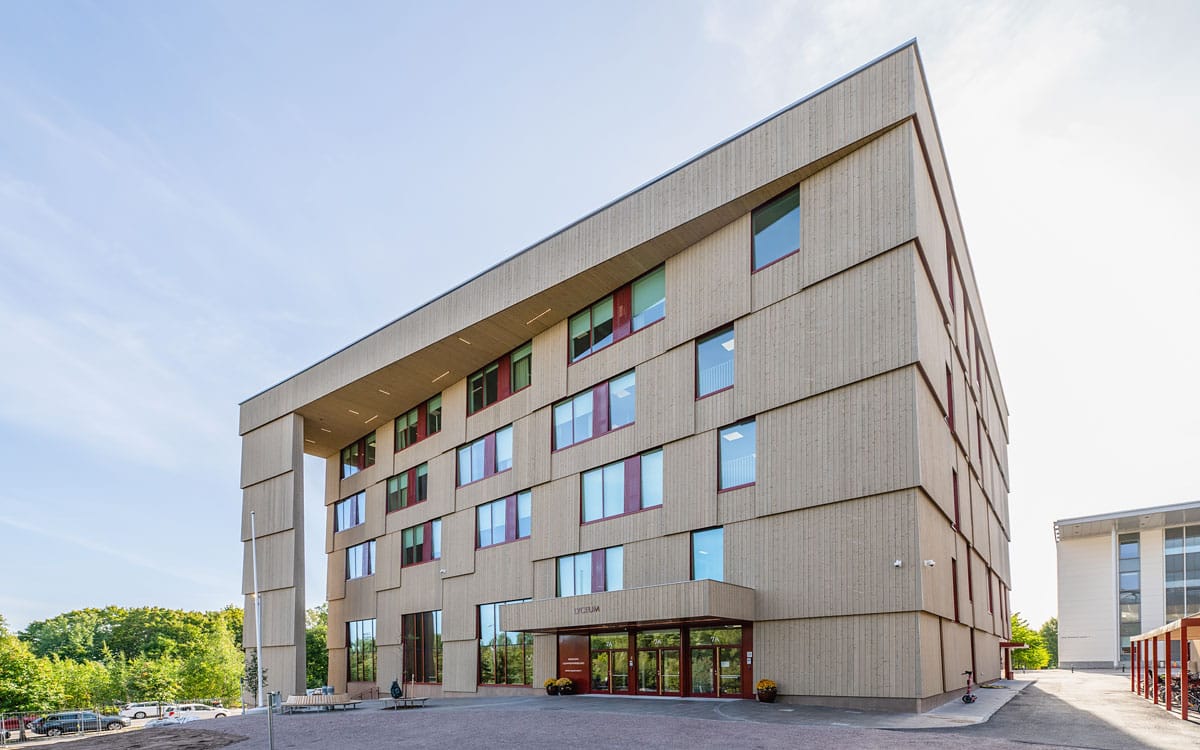
The five-story building is made of wood. Wood is a climate-resistant and ecological building material that offers students a comfortable, safe and healthy learning environment and saves the environment throughout the building’s life cycle. Wood has also been used versatilely in the decoration of the premises.
A hybrid structure combining steel, wood and concrete was chosen as the frame solution. Structure lowers the building’s carbon dioxide emissions both during the construction phase and during its life cycle. Framework consists from Stora Enso’s cross laminated timber (CLT) tiles, Versowood’s glulam beams and Peikko’s DELTABEAM® composite beams. Puurakentajat Oy, which erected the frame of the building, has previously contracted with similar buildings, for example in kindergarten projects in Helsinki.
The flexible hybrid structure enables easy modification of the building. This extends the life cycle of the building and thus also makes the investment more profitable. Special attention has been paid to the multi-purpose facilities and they are designed to be as flexible as possible. For example, the building has no load-bearing partitions at all, and there are only two reinforced staircases in the entire building.
The building also saves the environment by utilizing local renewable energy. The building’s main form of heating is geothermal heat, and the solar panels installed on the roof generate electricity for the property’s use. Several technical solutions that increase energy efficiency and comfort have been utilized in the premises, for example, sensors measuring carbon dioxide concentration have been attached to the interior ceiling.

Teaching in the new premises of the high school of natural sciences started in autumn 2023. Construction work started in the summer of 2021, when the construction company SRV and Helsingin Yliopistokiinteistöt Oy signed an agreement on the implementation of the new building. The new facilities were needed because the original building on Mäkelänkatu in Käpylä became cramped as the number of students grew. The City of Helsinki is in the premises as a tenant of Helsingin Yliopistokiinteistöt Oy.
The goal of the project was a safe, healthy and appropriate learning environment for the use of more than 900 students and 60 teachers. The future users of the building were involved in the project from the beginning. Parties worked in close cooperation starting in the planning phase, so that the future solutions would serve the students in the best possible way. The project was implemented as a cooperative project management contract, with a total cost estimate of approximately 22 million euros. AFKS – Architects Frondelius+ Keppo+ Salmenperä was responsible for the school’s architectural design, and SRV was the main contractor. The size of the building is approximately 5,400 square meters.
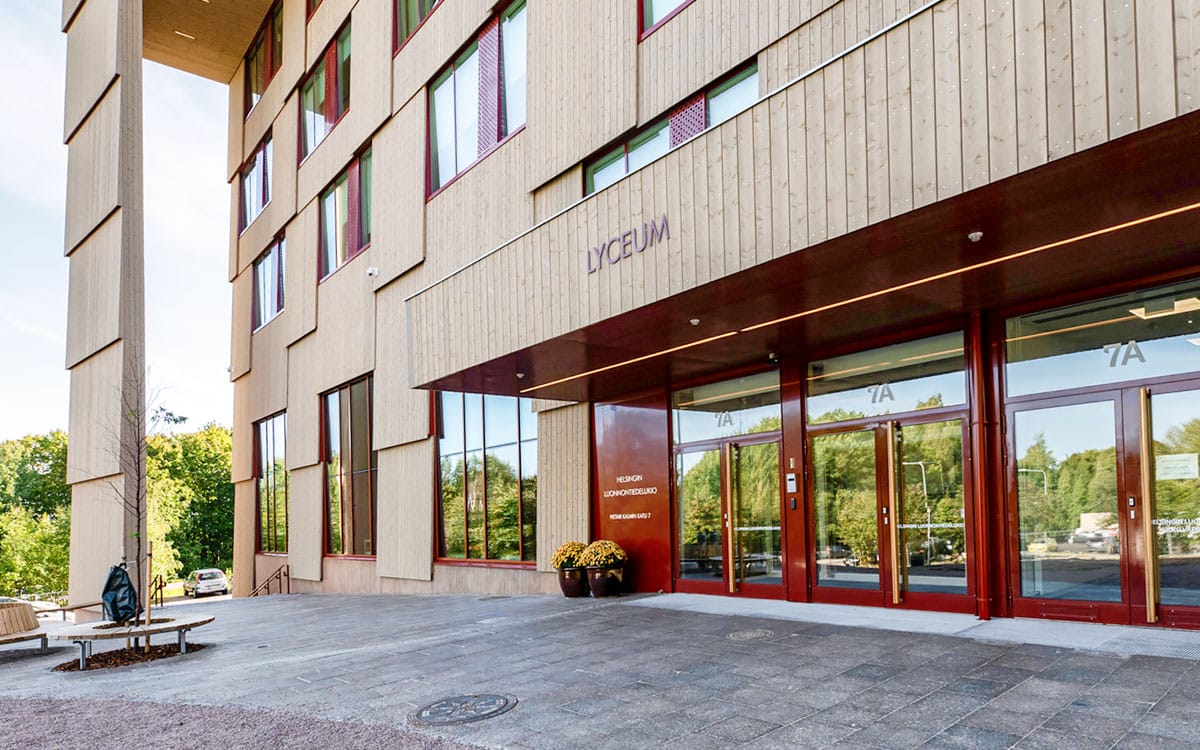
We carried out fire engineering planning for the site, gave expert opinions and performed an inspection. Since it was a wooden building whose number of floors (five), height (22 m) and planned number of people (1700) exceeded the limits of fire class P2 (4 floors, height 14 m, 1000 people), we used performance-based fire safety design. Performance-based design made it possible to implement the building to fire class P0.
With the fire simulation and the risk analysis based on it, it was possible to show that the wooden frame school building in question, which also has visible wooden surfaces, is at least as fire safe as the corresponding P1 fire class school building made according to the traditional table dimensioning requirements, whose load-bearing frame is made of non-combustible materials. In terms of structures, the risk of collapse is lower than in the traditionally designed reference building, and in terms of personal safety, the building is essentially safer than the traditionally designed reference building that was used in comparison (this is based on sprinkler system).
The project was an opening in terms of the fact that similar requirements could also be applied to other similar school buildings in the future and serves as a good basis for the possible extension of fire regulations to higher wooden frame school buildings.
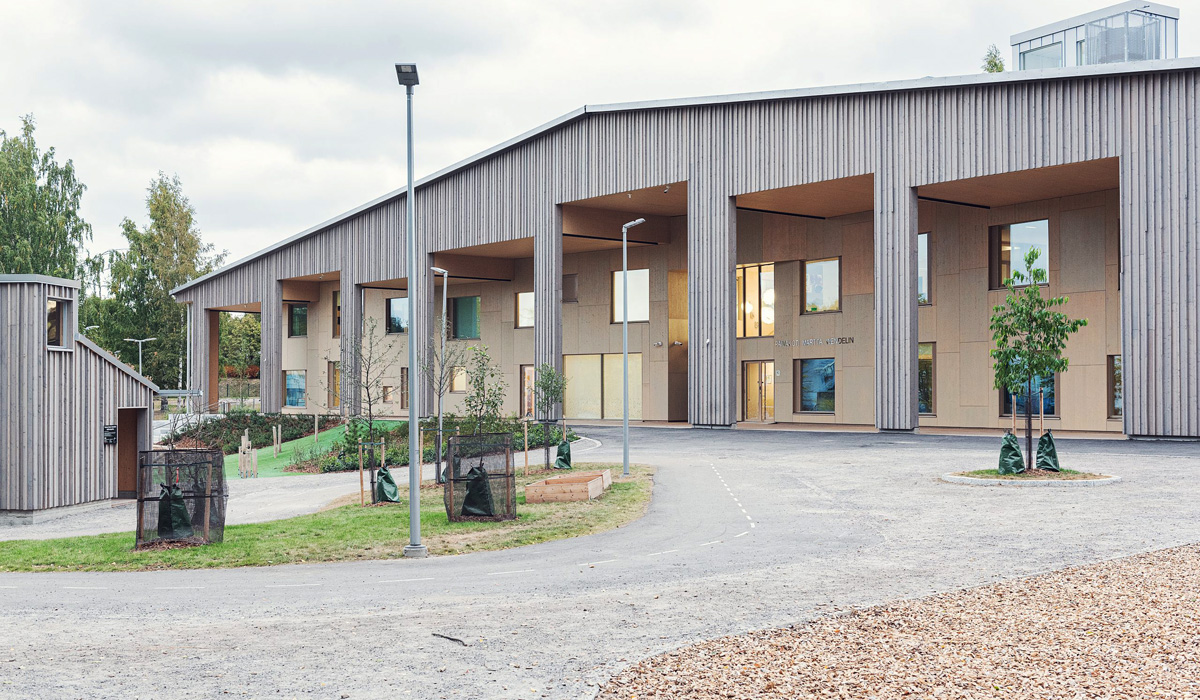
Päiväkoti Martta Wendelin is a daycare center for ten early childhood education and care groups that offers daycare and pre-primary education places for around 200 children. The building’s versatile and flexible spaces include, among other things, a gym suitable for evening use, a studio suitable for basic art education, a dining room and office spaces. In addition, the kindergarten has a large yard area.
The daycare facilities are designed to support children’s learning and well-being and to create an optimal environment for children’s development. The primary goal of the design has been a safe and peaceful operating environment, which has been achieved by using wood as a building material, favoring a restrained color palette and taking care of light, good ventilation and pleasant acoustics.
The interior of the kindergarten shows the art of the visual artist Martta Wendelin, who gave the kindergarten its name. Wendelin’s art brings visual joy and inspiration to the milieu. Martta Wendelin was one of the most famous Finnish illustrators of the early 20th century, known especially as an illustrator of cards, covers and story books.
Päiväkoti Martta Wendelin was built in compliance with the environmental criteria of the official ecolabel of the Nordic countries, Nordic Swan Ecolabel (Joutsenmerkki), which emphasizes low energy consumption, good indoor air and the reuse and recyclability of building components. The vision of the Nordic Swan Ecolabel is a sustainable society, in which future generations can benefit from the same conditions and opportunities as we ourselves do. The criteria guarantee the building’s environmental friendliness throughout its entire life cycle. These were taken into account both in the construction phase and in the future operation of the daycare center. In August 2022, the Päiväkoti Martta Wendelin received its own Nordic Swan Eclobale as well-deserved recognition for its positive impact on people’s health and the environment.
In a few years, solid wood has become a trendy material also in public construction projects. Public sector wooden construction is accelerated by the national goals set by the Ministry of the Environment. The goal is for wooden buildings to account for 45 percent of all new public buildings in 2025.
In the implementation of Päiväkoti Martta Wendelin CLT solid wood elements were used. CLT elements, which are consist of wood boards that have been stacked crosswise on top of each other and glue-laminated together, are environmentally friendly and reduce the carbon footprint. The outer lining was made of weather resistant larch panels. The project’s environmental impact and life cycle carbon footprint were evaluated using the evaluation method of the Finnish Ministry of the Environment.
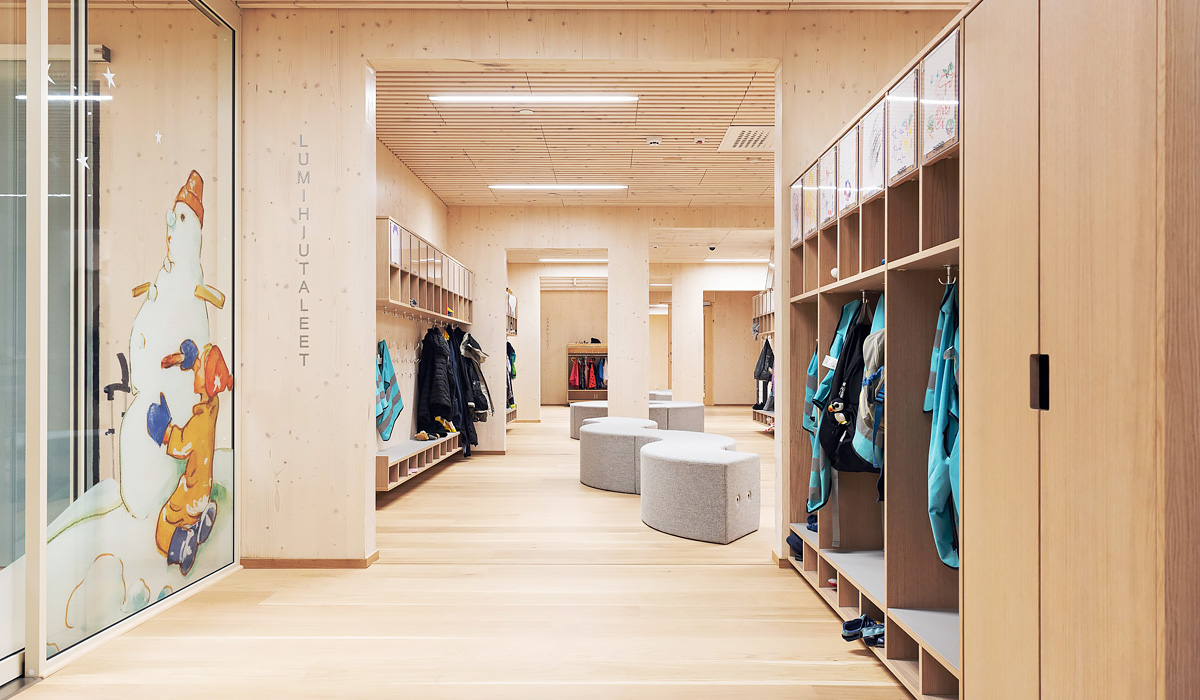
Päiväkoti Martta Wendelin received the international recognition and visibility it deserved after winning a major wood architecture prize awarded by the international press in the spring of 2023. The award was announced at the Forum International Bois Construction event in the city of Lille, France, on the April 13th. 2023.
The annual wooden architecture award in question was awarded for the fifth time. The purpose of the award is to highlight excellence in wooden architecture, encourage innovative architecture and unite those countries where wooden construction is valued. The award jury consisted of representatives of five magazines focusing on wood construction and architecture, who chose the winner from among the nine nominated buildings. In its assessment, the jury especially praised the use of CLT panels.
The international award is proof of the building’s high quality and innovation and strengthens Päiväkoti Martta Wendelin’s reputation and status as a pioneer of top-class Finnish wooden architecture.

For us, Päiväkoti Martta Wendelin was an quite ordinary work, where we used traditional fire safety design according to preset fire classes and numerical values based on the Decree 848/2017 on the fire safety of buildings by Ministry of the Environment. In this case we did not apply performance-based fire safety design. Because the building is a rather large two-story wooden daycare designed for P2 fire class, the size of the fire compartment required an automatic fire suppression systems. The “double staircase” descending from the second floor was perhaps the most unusual detail. In addition to the two stairs that are normally used, the second floor can be exited through two separate stairwells.
In the project, we worked as part of the building’s design team and guided the building’s design from the point of view of fire safety. We had a project plan as a starting point. We were involved in the general building design, building permit phase and the commissioning process of the building. We prepared a fire engineering and smoke extraction plans for the site and consulted the design team. We did not give statements about the object.
We also participated in the supervision during construction, for example we ensured the implementation of the site according to the fire safety design. We were also present during the special fire inspection of the site (a fire inspection by the rescue authority before the commissioning inspection by the building inspectorate).
The planning of the building lasted from 2018 to 2020, its construction began in 2020, and it was completed in May 2022. The daycare started operating on August 1, 2022. The municipality of Tuusula was the developer of the daycare center, and Architects Frondelius + Keppo + Salmenperä Oy were responsible for its design. The general contractor of the building was Arkta Rakennuskultti Oy.
The impressive new buildings of the Meilahti Bridge Hospital and Comprehensive Cancer Center rose in the Meilahti Hospital area of Helsinki, on a triangular plot bounded by the Meilahti Tower Hospital, the Department of Oncology and Paciuksenkatu street. The design of the new hospital has been based on a simple and functional structure and flexibility. In the project, special attention has been paid to the building’s energy efficiency, good indoor air quality and versatile utilization of natural light.
The name of the hospital comes from the glass-walled bridge connecting the spaces of the two-part building. In addition to connecting passages, the structurally demanding steel bridge has meeting rooms and a large lounge staircase. The solution was reached because the corridor connecting the buildings could not be built at ground level because of the roadway. The bridge is mainly used by, for example, students of the teaching hospital and relatives visiting the hospital. Hospital patients are transported less often.
The Bridge Hospital was connected to other buildings, tunnel network and hospital technology in the Meilahti hospital area. The building was integrated into the old personnel and building technology tunnel which passed under the new building. Old tunnel was decided to be preserved for cost reasons. The old tunnel was used by other hospitals throughout the construction project. The integration of numerous connection points has been one of the most demanding similar projects that has been implemented in Finland.
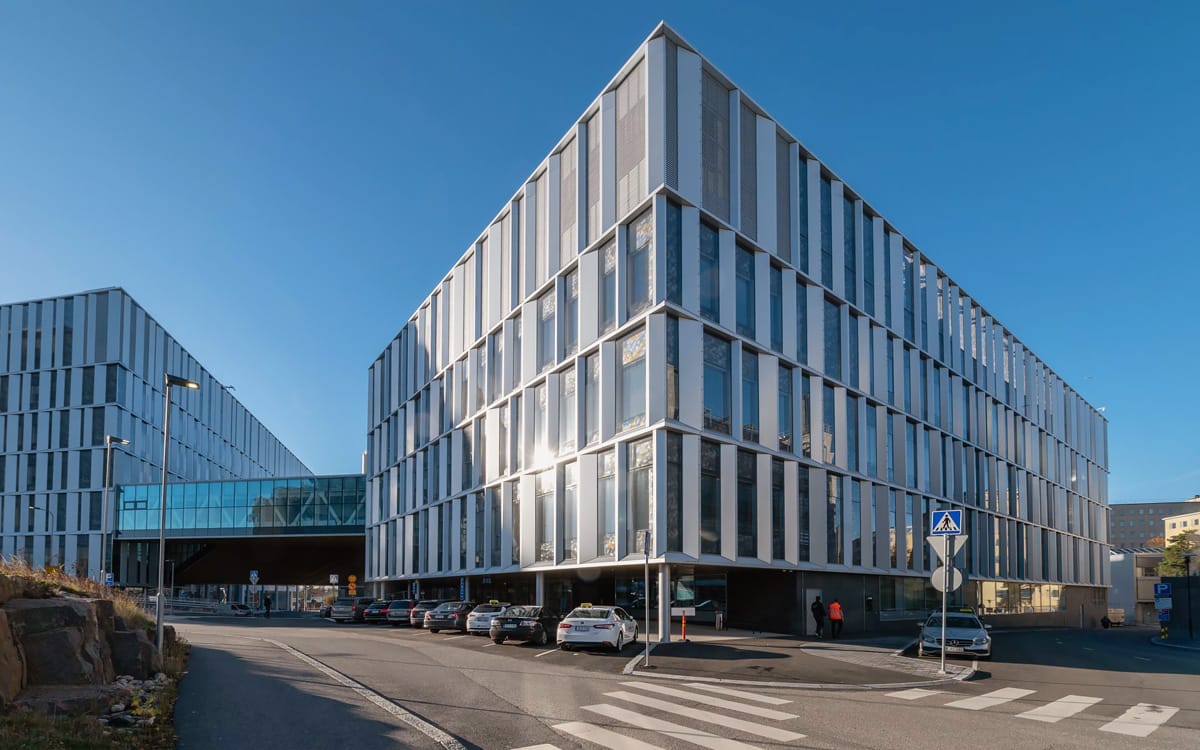
As a project, HUS Bridge Hospital was not only one of the largest and most extensive projects in our company’s history, but also one of the longest-lasting. We started working on the project in March 2016 and finished our work more than six years later. We did most of the fire safety design during the years 2016-2018. The documents required for the building permit were drawn up in 2017, and the building permit application was submitted at the end of the same year.
For us, the project started as a traditional fire safety design. Traditional fire safety design is based on the intended use of the building and predetermined fire load groups, as well as the testing and classification of the fire properties of building components. The fire safety design was carried out “as traditionally done”, i.e. almost entirely according to preset fire classes and numerical values of “dimensioning tables” as until the building permit application was ready. Nowadays a significantly larger part of the fire safety engineering would probably be carried out with performance-based fire safety design using various fire and evacuation simulations as a tool – primarily to ensure safety, of course, but also to find cost savings in structural solutions.
In the case of the safety design according preset numerical values, some applicable solutions had to be made. For example, due to the huge size of the building, special attention had to be paid to the design of a few individual evacuation routes. The bridge between the buildings is not just a simple passageway. Officially it is community gathering space, which has its own influence on the design of the building’s operational and fire safety according the regulations.

In a few details, we used simulations even before the building permit application was completed. The Bridge Hospital was designed in such a way that it is easy to find your way around the building without the need for guiding floor tapes. The implementation is based on three high glass lobbies, which act as a kind of fixed points. We study the behavior of the glass walls of these lobbies with simulating an assumed fire development.
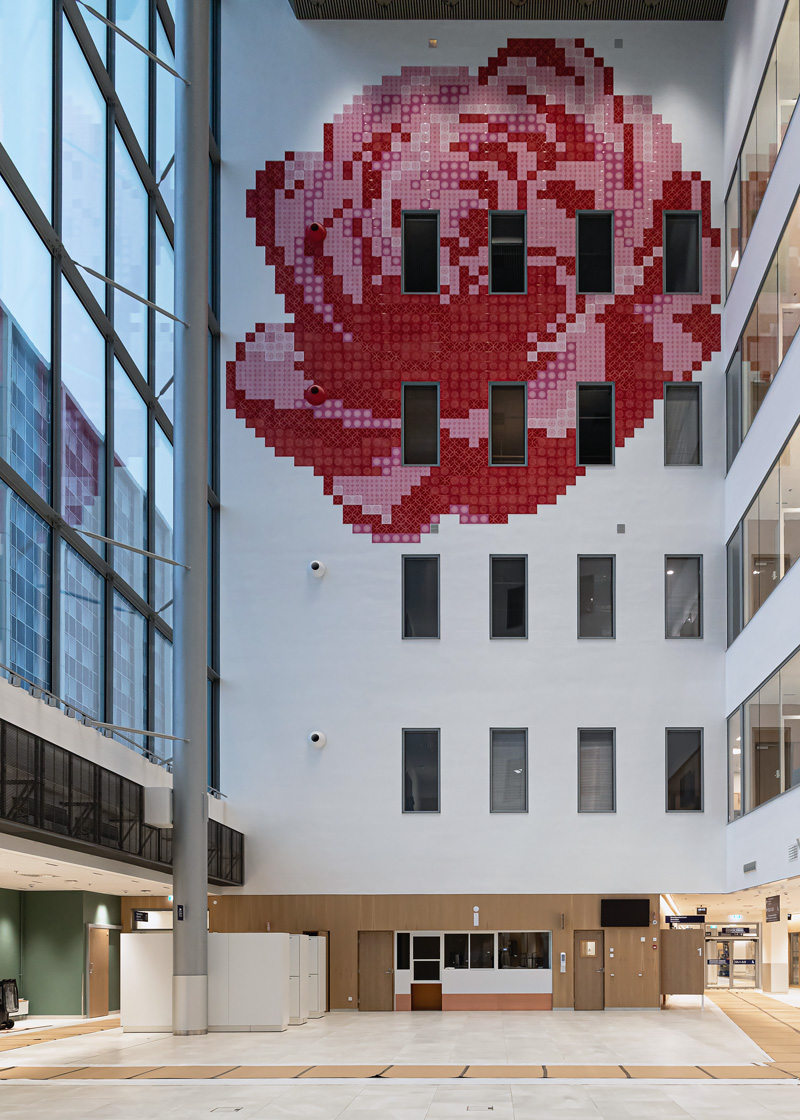
After the original building permit was granted, many details of the plans have been refined with performance-based fire safety design and simulations, and change permits have been applied if it has been necessary. Simulations were performed, for example, in following cases:
Alternatives to fire safety structural solutions, especially glass structures, were sought with performance-based fire safety design – also with a view to cost savings. Since the hospital’s lighting was designed to utilize natural light, there are plenty of glass surfaces. More than 5,400 windows have been installed in the building.
Our services in the Meilahti Bridge Hospital and Comprehensive Cancer Center construction project included:
Our main memory of this great project is that fire safety was taken care of exceptionally well and based on the best possible knowledge. In many projects the fire consultant’s tasks have ended with the granting of the building permit, but in the Bridge Hospital project, we were closely involved until the very end. Every detail affecting fire safety was verified, every change made to the plans was checked, we answered continuous questions, new opinions were requested all the time, and a lot of simulations were also done. We emphasize that it is very exceptional that the customer wants to take care of the fire safety so well, and that’s why mistakes occur in many other projects during construction. That is why we are confident that Bridge Hospital’s fire safety solutions are certainly in order.
The Bridge Hospital, built between the Meilahti Tower Hospital and the Department of Oncology, replaces the functions of the Töölö Hospital and part of the Department of Oncology and joins the adjacent buildings forming a unified whole with them. Bridge Hospital has been the largest construction project in the history of the Joint Authority of the Helsinki and Uusimaa Hospital District and one of the most demanding and extensive hospital construction sites in the history of Finland.
The Bridge Hospital was a construction project worth a total of 305.5 million euro. Project lasted seven years. The hospital consists of two new buildings and a passage, a bridge, connecting them. The hospital is owned by the Joint Authority of the Helsinki and Uusimaa Hospital District (HUS) and its builder was HUS Kiinteistöt Oy. HUS Kiinteistöt Oy is a wholly owned subsidiary of HUS Helsinki University Hospital. The main contractor was SRV, one of Finland’s largest and most experienced hospital builders.
At the start of the hospital’s operations, the construction project, which went by the name of HUS Siltasairaala (“HUS Bridge Hospital”) during construction, was divided into two operating hospitals, Meilahti Bridge Hospital and Comprehensive Cancer Center. With the new hospitals, a significant part of Finland’s most modern and high-level specialized medical care and special medical expertise will be concentrated in the Meilahti hospital area.
The Bridge Hospital has 58 intensive care beds, 16 operating theaters, 215 beds divided in four wards, 69 day hospital beds, outpatient clinics and other spaces like restaurant and teaching facilities. The volume of the building is more than 350,000 m³, which is equivalent to more than three Parliament House of Finland, and its total area is approximately 71,500 m² – almost the same as seven soccer fields combined! The number of floors of the hospital varies from the five floors in the lowest part of the building to nine floors in the highest part.
More than 3,000 separate rooms have been implemented in the building, some of which are technically very demanding and intended for, among other things, intensive care, surgeries, medical imaging and radiation therapy. The operation and facilities are designed around research and treatment equipment. The starting point for space planning has been to reduce the need to transfer patients, because especially in the case of the trauma center, short distances may save lives.
It is important for both staff and patients that all hospital facilities are safe and enable efficient patient care. The hospital’s fire safety must simply be in the best possible condition, as a fire can seriously damage people, patient data and hospital property. A fire that interrupts the operation of a hospital can cause serious consequences for patient safety long after the fire. A fire can also have extensive effects on the immediate surroundings of the hospital.
Several hospital and nursing facility fires have occurred in Finland over the years. In two out of three cases, the fire is human-caused, either intentionally, by mistake, or by accident. In several intentionally set fires, the culprit has been a psychiatric patient who set fire to the furniture in the patient room. Due to the openness of the hospital premises, there is also a risk of arson.
In one case out of three, the cause is a carelessly used or damaged device. The fire in October 2009 that caused significant material damage to Meilahti Hospital’s operating room and anesthesia department was ignited by disposable electrosurgical pencil that was incorrectly used and dropped in the wrong trash can. Fortunately, there were no fatalities. The fire that broke out at Turku University Central Hospital’s emergency clinic in September 2011 was caused by a short circuit in the connector of the nurse call system in the patient area. Nobody died, but three nurses exposed to the smoke had to be transported for treatment and the fire caused damages of 17.5 million euros.
The risks and fire safety of the hospital environment are affected by the same principles as in other buildings, but the stakes are higher than usual. Evacuation during medical procedures such as surgery can result in death. That’s why prevention is one of the most important factors affecting fire and personal safety in a hospital. For this reason, hospitals invest in continuous staff training and emphasize commitment to fire safety.
If the worst happens, it must be possible to leave the burning hospital safely. That is why the hospital’s fire safety planning focuses exceptionally precisely on e.g. evacuation routes, barrier-free access routes for the rescue service, fire loads, extinguishing equipment, smoke clearance, and limiting the spread of a fire and the toxic smoke gases it produces.
The level of planning for evacuation safety must be very high, because among those fleeing the fire there are often also children and people with reduced functional capacities, such as the elderly, patients with limited movements due to medical procedures or patients who are under strong medication.
It was decided more than 10 years ago to transfer the operation of Töölö Hospital to the Meilahti hospital area. The Bridge Hospital construction project started in the spring of 2015, when the Joint Authority of the Helsinki and Uusimaa Hospital District HUS organized an invitational competition for architectural offices for the new Meilahti hospital building. At that time, the project was called HUS Traumakeskus-syöpäkeskus, “HUS Trauma Center – Cancer Center”. The competition was won by the consortium Team Integrated. The main designer was Matti Anttila from international architecture company AW2 Architects Oy.
In June 2017, a project management contract was signed for the project. The project was started with a half-year development phase, and design solutions were drawn up in cooperation between the builder, future user, designers and contractor. The cooperative project management contract enabled simultaneous planning and construction, which aimed to ensure that the premises of the new building are as up-to-date as possible and meet the needs of future users.
The main and architectural design of the bridge hospital was handled by Team Integrated, the winner of the architectural competition. Consortium included AW2 Architects Oy, Brunet Saunier Architectures S.A., B&M Architects and architecture office Harris-Kjisik. The huge size of the building caused its own challenges for the design, as did its location. The new building was placed in the middle of a working hospital area and even in the middle of Helsinki.
The construction site of Bridge Hospital started in January 2018 with demolition, earthworks and excavation works. The foundations were made in May 2018 and the element installations of the frame phase started in September of the same year. The construction time of the project was exceptionally long, as the challenges were especially the location, the cramped construction site and the connection to the tunnel network and hospital technology of the other properties in the Meilahti hospital area. The aim was to avoid disturbing the operating hospitals, so for example massive excavation work with explosions in the middle of the operating hospitals and their vibration-sensitive equipments was demanding.
The building was completed on time, despite new surprising challenges, such as the corona pandemic which forced office workers to work remotely. Of course, there were cases of illness at the construction site, but the infection rates were always so moderate that there was no need to stop the entire construction work. The construction work was completed in June 2022, and the hospital was handed over to the Joint Authority of the Helsinki and Uusimaa Hospital District.
The premises of the new Comprehensive Cancer Center were opened to the first patients on the January 3rd 2023. Meilahti Bridge Hospital opened January 23rd 2023.
The majority of the Länsimetro line runs in tunnels excavated underground at a depth of more than twenty meters, so the fire safety design of the metro’s underground facilities is exceptionally demanding. All available information on passenger safety, fire safety and evacuation safety has been utilized in the design, and automated property monitoring and security systems have been extensively used in the solutions to guarantee the safety of passengers.
Efforts to minimize the risk of a fire starting and spreading in a subway train speeding through its tunnel have been made beforehand as precisely as possible. Fire safety is taken into account comprehensively in everything, starting with the structural solutions of subway cars. For example, the materials of the carriages have been chosen from low-flammability materials and the interior has as little fire load as possible.
In the event of a fire, the metro train is driven to the next station, from which passengers are directed to exit safely. However, if the train has to stop in a tunnel, passengers still do not have to jump onto the rails. A wide exit platform has been built next to the rails to make it easier to get off the train.
Smoke extraction and evacuation routes in the tunnels have been thoroughly thought out. While trains in many metros around the world run side by side in the same tunnel, in Länsimetro they run in two separate tunnels. The tunnels can be isolated from each other with fire doors, which limit the spread of fire and toxic smoke gases from one tunnel to another.
Passengers can access the adjacent tunnel through fire compartmented connecting tunnels. There are connecting tunnels approximately every 150 meters. The distance is based on simulations that have shown that a full train of passengers can be evacuated to safety quickly enough, even from a strong fire, through connecting tunnels placed at this distance from each other. In addition to connecting tunnels, the tunnels can also be exited through the vertical shafts built between the stations.
To ensure the operational readiness of the rescue service, the rescue service has been allocated its own water and electricity points and planned its own access routes to stations and tunnels. Communication between rescue authorities and other personnel is handled by the communication service Virve, which is used in rail transport and the metro in the capital region, with which drivers, orderlies, maintenance, the control room, as well as the authorities and the emergency center can quickly contact each other in emergency situations.
The underground coverage of the Virve network is good, but in the tunnels, the vital communication of the rescue service personnel is also ensured by landlines. Rail carts are placed at both ends of the stations, with which the rescue service can transport equipment and patients along the track if necessary.
The fire design of subway stations located on the surface is quite similar to the design of conventional buildings, but several significantly different solutions have been implemented in them as well. Evacuation arrangements and passenger safety were absolutely primary in the design.
Escalators equipped with enhanced smoke extraction serve as the primary evacuation routes of the stations. In the event of a fire, the downward moving stairs stop automatically, and the upward moving stairs continue to operate. In addition to the escalators, the world’s first fire-resistant evacuation elevators installed at the stations serve as evacuation routes. As far as we know, similar evacuation elevators for people with reduced mobility are not in use anywhere else.

Some metro stations are built in connection with shopping centers. The underground spaces of the stations are designed so that pressurized exits, fire doors and automatic smoke extraction prevent smoke from rising from the platform level to the escalators or the shopping center. All stations have an automatic extinguishing system, which quickly binds the heat produced by the fire and limits the spread of the fire by lowering the temperature of the burning surfaces. In the best case scenario, the extinguishing system may even put out the fire before the rescue services arrive.
In addition to fire engineering plans, we have designed e.g. station exit arrangements, exit route guidance and automatic announcements, which speed up evacuation by urging the public to use the nearest exit. We have also designed the principles of the controls given by the fire detectors for various fire engineering systems. The fire alarm system supplied by Siemens is a key part of the metro’s safety, as traffic control and automatic safety and extinguishing systems are linked to the control given by fire detectors.
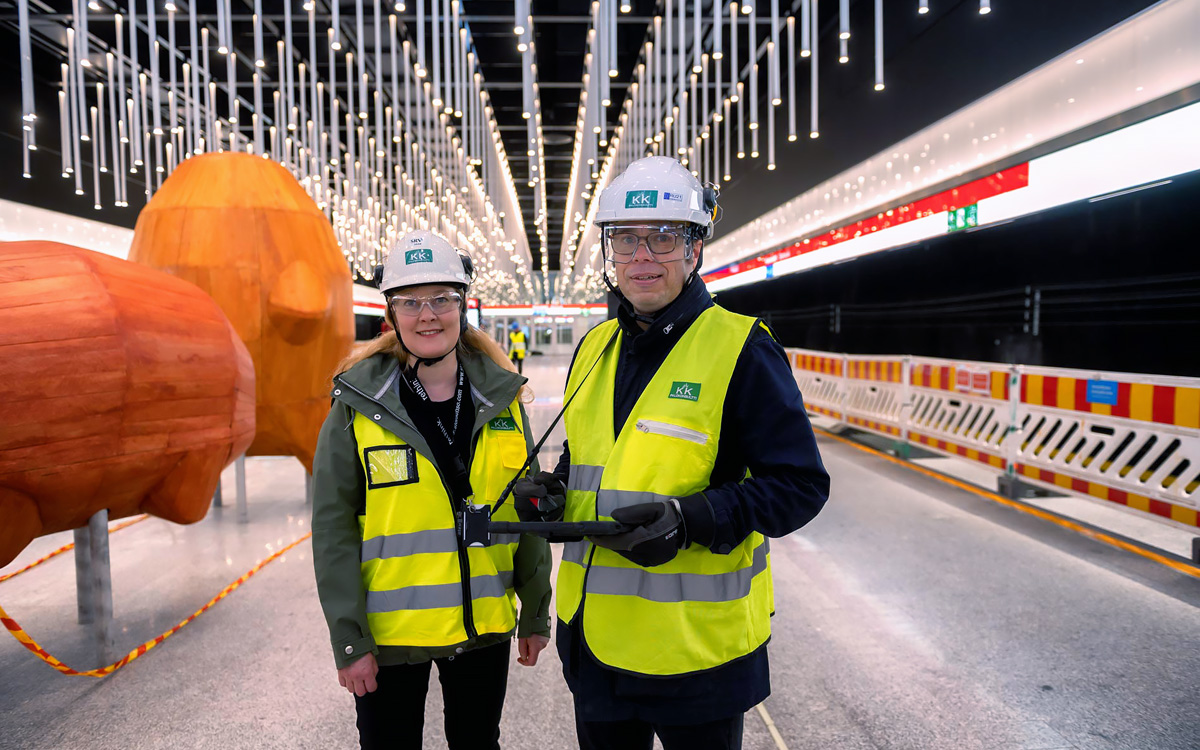
The safety of passengers and ensuring the continuity of metro operations in possible fire situations is of paramount importance. Therefore special attention was paid to evacuation safety, enabling the efficient operation and safety of the rescue service personnel, and demanding smoke extraction solutions for underground facilities.
The basic principles of fire engineering design were often advanced by applying traditional dimensioning tables, but the most demanding and significant solutions are mainly based on performance-based fire safety design and computer simulations. There was no need to reinvent the wheel, because most of the solutions applied to the second phase have already been used elsewhere, and they are largely based on the solutions of the first phase. However, there are some deviations. For example, the new stations differed from the type stations defined in the first phase, so many details had to be redesigned.
Our services in this exceptionally challenging project have included:
KK-Palokonsultti Oy has participated in the fire safety planning of Länsimetro almost from its initial stages. The fire safety planning of the first phase of the Länsimetro was in charge of L2 Paloturvallisuus. Kalervo Korpela of KK-Palokonsultti Oy was at that time involved in evaluating fire engineering plans on behalf of Länsimetro Oy, the third party inspector was VTT. In essential parts the inspection was based on the assumed fire development. In the second phase of the Länsimetro, KK-Palokonsultti Oy was responsible for fire safety planning.
Länsimetro has been a project that has been permanently imprinted on our minds. For example the coordination of information and plans is very challenging in projects of this scale. Even the authorities approached the fire safety plans with exceptional precision and seriousness. The metro was built according to very strict official requirements, which aimed to ensure that the end result would be absolutely safe. The goal of planning the Länsimetro was set to be the safest subway in the world. We believe that this goal has also been achieved.
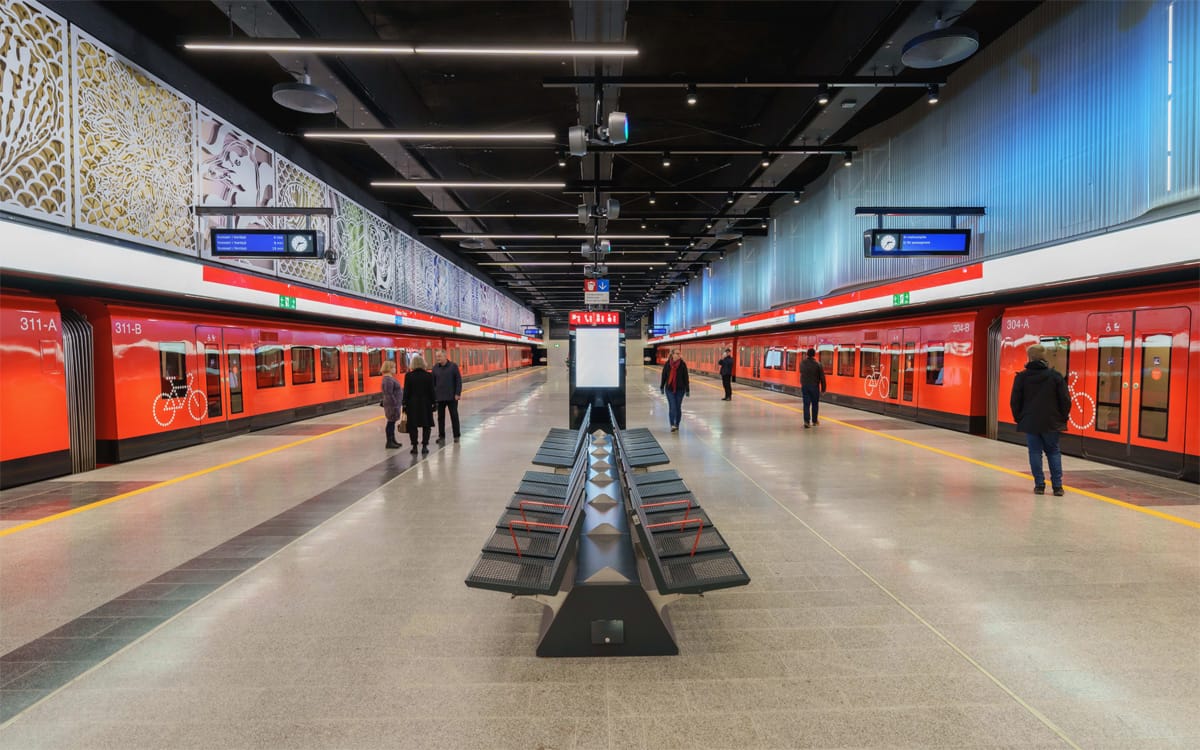
The Länsimetro offers a fast and efficient form of public transport to the western parts of the capital region and offers Espoo residents easy access to the central destinations of the capital region. Länsimetro is a part of the Helsinki metro, which connects the center of Helsinki with the eastern districts and the west with Etelä Espoo and forms the basis of public transport in the Helsinki region together with local trains and regular bus lines. Länsimetro’s ticket system is compatible with other public transport services in the capital region.
The Länsimetro is a joint public transport project of Helsinki and Espoo that started in 2003, the purpose of which was to facilitate the movement of the population in the growing western parts of the capital region and to offer an alternative means of transport alongside the bus and tram lines. The original idea was born in the previous millennium, as a metro line similar to the Länsimetro was proposed to be built already during the planning phase of the Helsinki metro in the 60s. In March 1963, the metro committee of the city of Helsinki presented a master plan that contained 108 stations along the 86.5 km metro line extending to neighboring municipalities. At the time, the proposal did not catch on and the story of Länsimetro continued in 1999, when the Espoo city council gave permission to start planning.
After many colorful stages, Espoo’s city government decided in August 2006 to support the construction of a subway from Ruoholahti to Matinkylä. The city council agreed to the project in September of the same year. The Länsimetro master plan was completed in 2007. The cities of Espoo and Helsinki founded Länsimetro Oy, which was responsible for the implementation of the first and second construction phases of the Länsimetro.
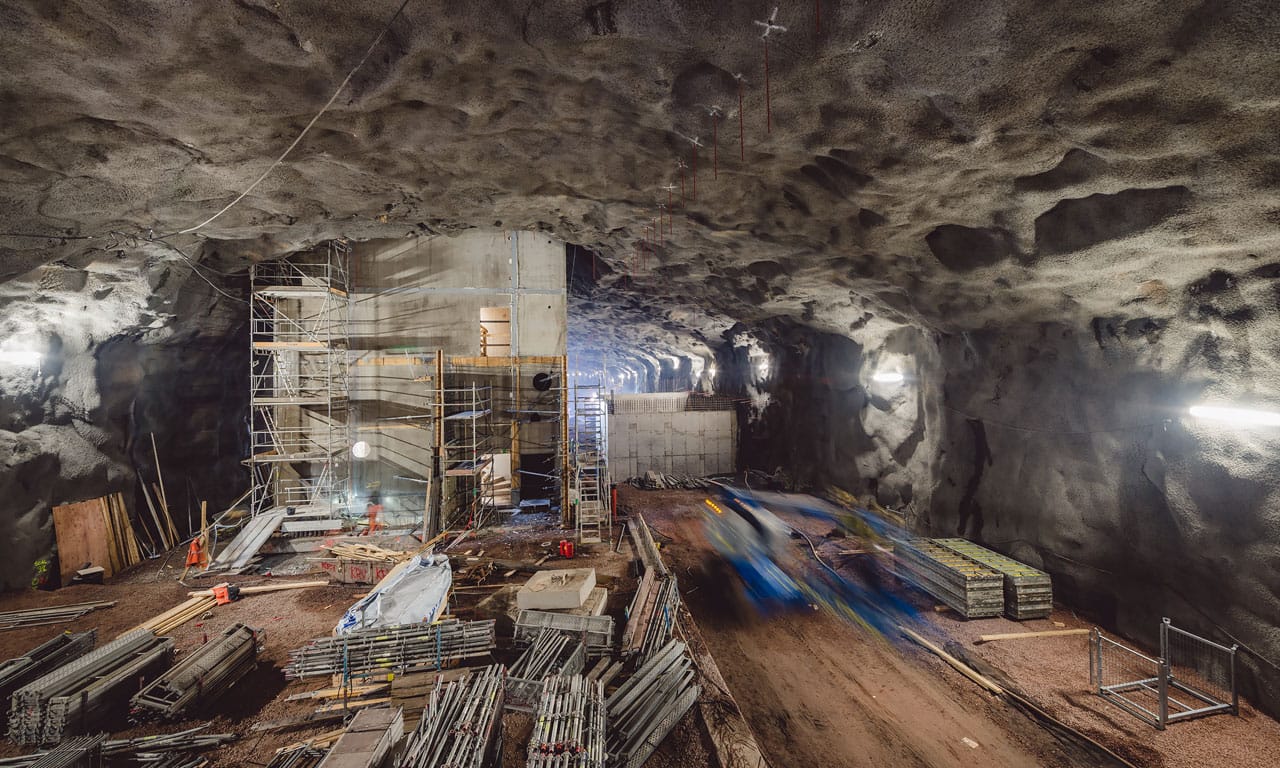
Länsimetro was estimated to be completed in 2014, but due to delays and problems with the construction project, the completion had to be postponed for several years. Länsimetro construction work began in Ruoholahti in November 2009, and the excavation work of the first phase was completed at the end of February 2014. The first phase, put into operation in November 2017, included the extension of the metro line west to Matinkylä metro station. There were eight stations on the almost 14-kilometer section: Lauttasaari, Keilaniemi, Otaniemi, Tapiola, Urheilupuisto, Niittykumpu and Matinkylä.
The project plan for the extension of Länsimetro, i.e. the section between Matinkylä and Kivenlahti, was completed and approved by the city council in 2012. The financing was approved by the Espoo City Council in September 2014, and the actual construction work started in Suomenoja at the Finnoo construction site in December of the same year. The second phase included seven kilometers of new railway line and five new metro stations: Finnoo, Kaitaa, Soukka, Espoonlahti and Kivenlahti. In addition, an underground subway depot was built in Sammalvuori. The second phase was supposed to be completed in 2020, but the date was later postponed and passenger traffic was estimated to start in 2023. However, the connection to Kivenlahti opened faster than expected.
Construction contracts for the metro stations ended in May 2022, and traffic in the second phase started on the third of December 2022. After the completion of the second construction phase, the whole of Southern Espoo (Suur-Tapiola, Suur-Matinkylä and Suur-Espoonlahti) was covered by rail traffic. With the new section and new stations, the length of the Helsinki metro is now 43 kilometers and there are a total of 30 stations along it. The Helsinki metro is used approximately 63 million times each year.
The transformation of car city Espoo into a metro city is expected to accelerate Espoo’s growth and increase investments in the area around metro stations In the future. As a company from Espoo, we believe that in the near future public transport on rails and the strong new construction around metro stations will lead more and more people to public transport and thus have a positive effect on the climate and our environment.

The Helsinki metro connects the center of Helsinki with the eastern districts of the city and the Etelä-Espoo. The metro operates with two lines, M1 operates between Kivenlahti-Vuosaari and M2 between Tapiola-Mellunmäki. Länsimetro is an extension of the Helsinki metro to Etelä-Espoo. The first phase, completed in November 2017, included the extension of the metro line to the west to Matinkylä metro station. The section has eight metro stations. In the second phase, the metro line was extended with five new stations up to the Kivenlahti metro station, and a new underground metro depot was built in Sammalvuori. The Länsimetro extension opened on the third of December 2022.
The high school and community center Monio is currently under construction in Tuusula Rykmentinpuisto in Hyrylä’s old barracks area. It is becoming a common living room for the citizens of the municipality, not only a modern and ecological school building. In addition to Tuusula high school, Tuusulan Opisto, visual arts school Tuusulan kuvataidekoulu and music college Keskisen Uudenmaan musiikkiopisto are located under the same roof. In addition, the building will have meeting, performance and exercise facilities for the citizens of the municipality. Various events, such as concerts, trade fairs, exhibitions and corporate events, can be organized in the flexible premises.
The architecture of the building adapts to the style of Hyrylä’s former garrison area, but at the same time it represents modern wooden construction, where wooden structures are used as an impressive architectural effect. The massive timber log school consists of five intersecting log houses that represents the scale of the old barrack buildings. The five log houses border high and meandering interior streets which create the atmosphere of a small town. The cladding of the facades and the shape of the roof refer to the history by reminding the viewer of the old garrison that operated in the area.

The building has a hybrid frame made of wood, concrete and steel. The wooden frame consists of wooden intermediate floors, glulam pillars and steel beams. The hybrid frame is built from approximately a thousand concrete elements. Basement structures, plinths and footing structures have been poured on site. The fire resistance time requirement for the load-bearing structures of the building is usually 60 minutes, except for 90 minutes in library and multi-purpose spaces and warehouses. The fire resistance time requirement for compartmentalized structures is usually 60 minutes.
Compared to traditional construction, wooden construction significantly reduces carbon dioxide emissions already during construction, and after construction the wood acts as a long-term carbon storage throughout the building’s life cycle. As an organic and breathable building material, wood improves indoor air quality and acoustics of premises. After completion Monio will be heated with carbon-neutral district heating and use green electricity which makes it even more ecological.

Monio’s premises are designed to be flexible, open and multi-purpose. Building’s future users, like teachers and students, cultural actors, decision makers and municipal employees, were included in the planning from the beginning. Instead of traditional classrooms, a significant part of Monio’s learning spaces have been placed in open lobbies. The implementation required the justification of architectural solutions with performance-based fire safety design. Larger facilities enable the number of students to increase, and the course offerings can be increased and diversified. The flexibly transformable spaces are excellent for organizing various events.
KK-Palokonsultti Oy has drawn up a fire engineering plan and a fire stop plan, given expert opinions, and consulted architects and other designers in the planning and construction phases of the project. The site’s largest three-story fire compartment (approx. 3300 m2), exceeds the maximum size allowed by the traditional table dimensioning (1200 m2). Therefore it has been justified with performance-based design (comparison principle). It has also been justified that in a sprinklered building no fire protection treatment is required for the surfaces of the log-built exterior wall of the ground level floor. Despite the deviations, the overall fire safety of the building has been found to be at least in line with or better than the fire safety level of the traditional table dimensions.
Monio’s contractor is Lujatalo Oy. The project will be implemented as a total price contract, i.e. a traditional competitive contract, which Lujatalo won in spring 2021. For Lujatalo, the project is the first project with a hybrid frame and timber log facade. The cost of the project ordered by the municipality of Tuusula is 27.2 million euros. The total area of the building is 8773 m2. Kuutti Halinen and Mikki Ristola from AOR Arkkitehdit Oy are responsible for Monio’s architectural design. Construction work has progressed according to schedule. Monio is scheduled to be completed by the summer of 2023.
The Päiväkoti Hopealaakso day care centre consists of seven activity areas located on both floors of the two-storey building. The building houses seven activity groups of 30 children. The day-care centre includes ballroom suitable for evening use, a multipurpose spaces and a workshop. The spaces are designed to be flexible and open: there are no corridors and the rooms can be connected without fixed partitions.
The choice of materials has been based on a feel of genuine materials which patinates beatifully over the time and are easy to maintain. Building is located in the marine environment, and it is protected for rainwater loads by a green roof. Tranquil facade conceals a series of “village-style” spaces. The facade cladding towards Koirasaarentie, which is more exposed to weather conditions and traffic noise, is pre-patinated zinc cladding. Courtyards facade is a beautiful warm-toned larch. The building is surrounded by a garden-like courtyard.
The interior of the kindergarten is rich in windows and glass walls. The common areas of the building are divided between both floors and are designed to be accessible and ergonomically functional. All suspended ceilings have been made absorbent: floors have step sound absorbing coatings and wall surfaces are clad with absorbent materials. Roof-mounted solar panels generate part of the electrical energy consumed by the building.
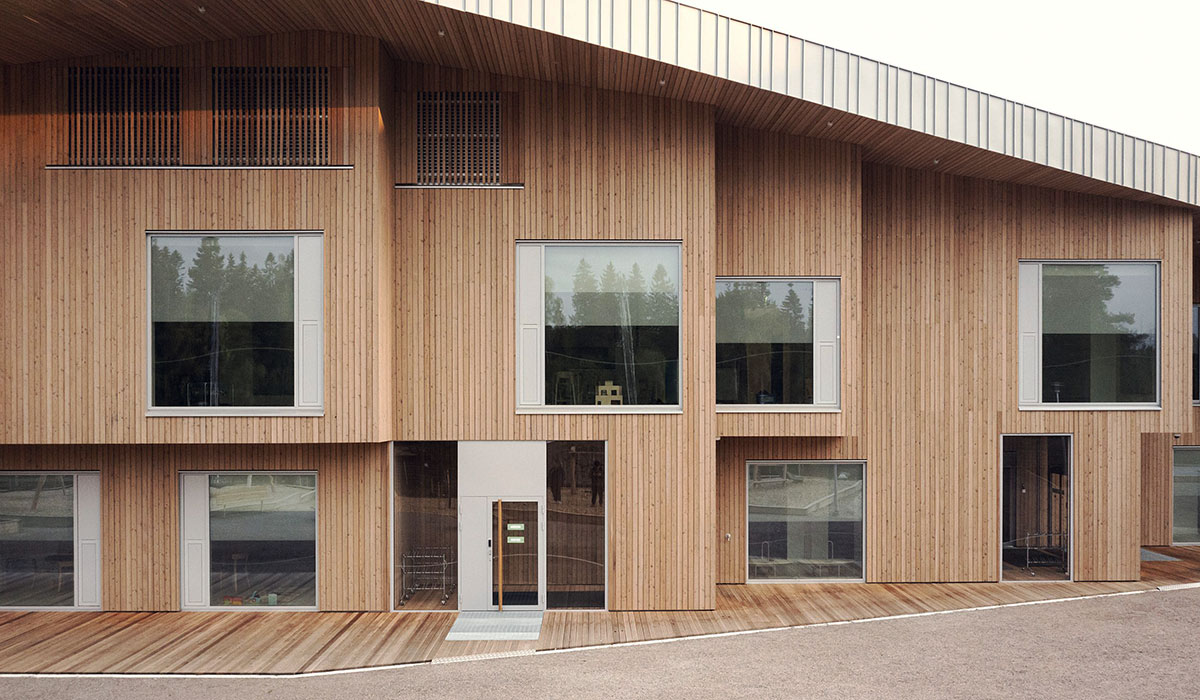
The Päiväkoti Hopealaakso day care centre was commissioned and built by the City of Helsinki. The City of Helsinki is aiming for carbon neutrality by 2030, and wood construction plays an important role in achieving this goal. One of the measures included in the targets is to increase the use of wood construction in the city’s own building projects.
The kindergarten, which opened in autumn 2021, was a response to the needs of the rapidly growing Kruunuvuorenranta area. The starting point for the design of the kindergarten premises were the quality criteria for a day-care centre buildings that supports well-being, as set by the City of Helsinki’s Education and Training Department. The building is also space-efficient in line with the city’s objectives. The day-care centre’s facilities can be adapted very flexibly if necessary, and its multi-purpose hall, for example, is available for use by residents in the surrounding area.
The procurement procedure for the project followed the City of Helsinki’s first ever two-stage design-build contract, where the contractor is also responsible for the design of the project according to the requirements and guidelines provided during the tendering phase. The project was tendered jointly with the Verkkosaari day care centre. The contractor was Oy Rakennuspartio, with Jari Frondelius of AFKS architects as the main designer and Mikko Liski as the project architect.
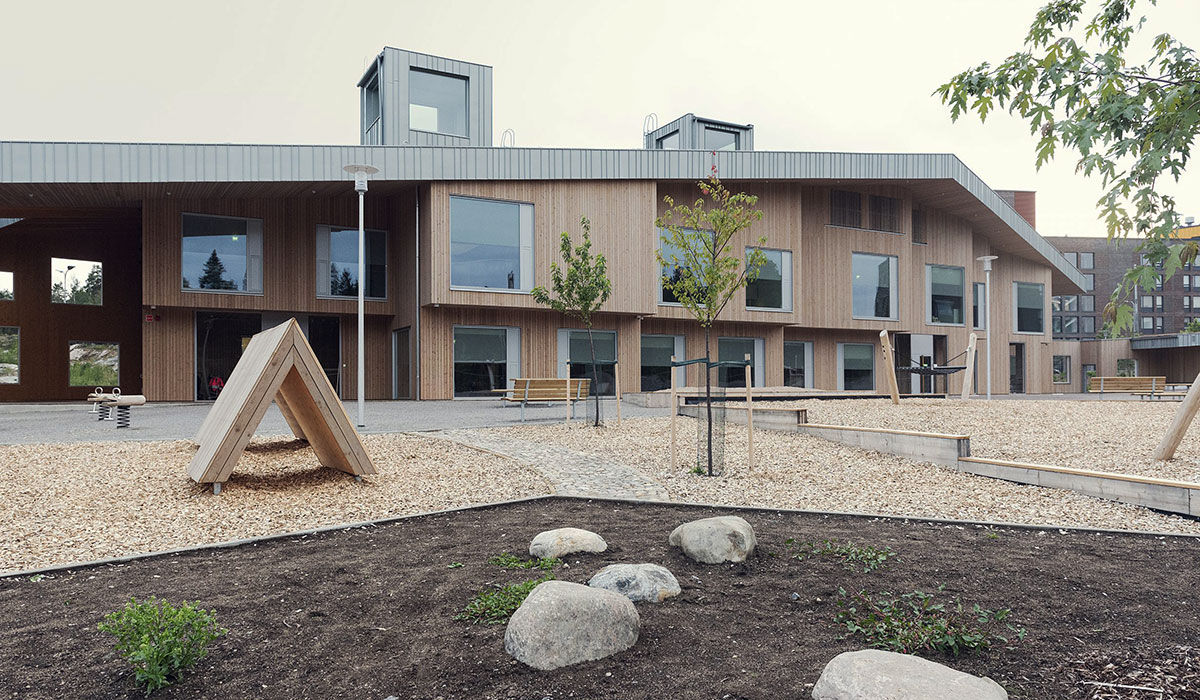
In autumn 2021, the Päiväkoti Hopealaakso won the Puuinfo Ltd. 2021 Wood Award. The annual Wood Award is an incentive for buildings, interiors or structures that represent high-quality Finnish wood architecture or where wood has been used in a way that promotes building technology. The winner of the award is announced at the annual autumn Puupäivä event (“Wood Day”) at Puuinfo.
The Hopealaakso kindergarten is the fourth award-winning building in the City of Helsinki. In 1994, Puuinfo awarded the Metsola Primary School, in 1998 the Viikki Wooden Apartment Building and in 2020 the renovation and renewal of the Helsinki Olympic Stadium.
A fire engineering design was carried out in 2020 for the building permit for the Hopealaakson Päiväkoti day care centre. The building has supported foundations and a ventilated concrete foundation. The two-storey building’s load-bearing exterior walls and stairwell walls are mainly CLT (cross-laminated timber) volumetric elements, which have been left largely exposed. The interior surfaces and the direction of the playground thus have a high number of exposed timber surfaces. The intermediate floors are realized with a hybrid construction, either consisting of CLT-concrete-jointed structures mounted on steel beams. The upper floor has a load-bearing CLT slab and wooden roof supports.
Päiväkoti Hopealaakso is designed for fire class P2. The building is equipped with an automatic fire extinguishing system and a fire alarm system. The functional areas form a two-storey fire compartment. The building’s escape safety has been ensured by exit simulations, by considering different staff load situations in the building.
HOAS Tuuliniitty is based on an architectural design competition from a wooden apartment building area to the Tapiola Tuuliniitty area in 2013. Competition was organized by the HOAS (Helsinki Region Student Housing Foundation) and Metsäliitto Osuuskunta (Metsä Wood). The competition was organized in co-operation with the Safa (Finnish Association of Architects), the City of Espoo and Aalto University, and was won by architectural office Arkkitehtitoimisto Jukka Turtiainen Oy by their proposal “Tiebreak“. Arkkitehtitoimisto Jukka Turtiainen Oy has since merged with Arkkitehtipalvelu Oy.
Tuuliniitty is located close to good services and good public transport connections, and its apartments are mostly studio apartments favored by students. Tuuliniitty offers 165 comfortable and modern ARA-supported rental apartments and quite versatile common areas with laundry rooms, saunas and other facilities. The building materials of the house have been chosen with ecology and environmental friendliness in mind. For example, solid wood used as the frame material acts as a carbon storage throughout the life cycle of the building, thus significantly improving the building’s carbon balance.
The whole wooden apartment building in Tuuliniitty is basically assembled from pre-fabricated apartment elements. Those wooden CLT (cross-laminated timber) volumetric elements by CrossLam serve as the building framework. The interiors of the solid wood apartments were almost completely pre-fabricated under factory conditions at their factory in Kuhmo. When these apartment elements arrived in Tapiola, they already included finished surface materials, fixtures, and household appliances.

Combining the hat-shaped roof with high construction and the building’s windy location posed its own challenges for wind load management. As a result of the architectural competition, this roof shape is nowadays a municipal building requirement at the area. Apartment building has also references to the architecture of the old apartment buildings with their similar facade dimensions and openings. These fine details serve as a tribute to Tapiola’s goals of building a modern Finnish garden city in the 1950s, which raised Finnish urban planning to world renown.
The next wooden building of the HOAS is already being planned. The building will eventually rise to Niittykumpu, Espoo. The design of the third house in Helsinki’s Kuninkaantammi area has also started.
Tuuliniitty 3, completed in the spring of 2020, is the first completed construction project in the Tuuliniitty area. Structural design was handled by A-Insinöörit, specialists in construction, structural design, community and environmental construction and infrastructure design. Company has characterized the design of the site as a long and demanding process.
HOAS Tuuliniitty proved to be a demanding design task for us as well. The 13-storey building is 1.5 times the height of buildings that can be designed with the standard dimensioning tables, which meant that we needed to use performance-based fire safety designs and fire simulations. We paid particular attention to facade fire control, personal safety, and a sufficiently low probability of collapse.
To achieve a safety level corresponding to fire class P1, an automatic extinguisher system was installed, larger dimensions (R120) and protective cladding were used in load-bearing wood structures. In addition, ground floor facade was built using non-combustible materials.
The HOAS Tuuliniitty construction project is extensively described in issue 2/2021 of Puuinfo magazine, published in October 2021. The project was also thoroughly presented at Puuinfo’s Puupäivä (design day) on November 4, 2021. The video of the Puupäivä can be viewed on the Puuinfo channel on Youtube. Tuuliniitty is introduced right at the beginning of the video.
KK-Palokonsultti Oy has been involved in the development project of wooden parking garages as part of TILA Group’s partner team. The starting point of the design project is simply to use as much wood as possible.
The project also has a strong circular economy perspective, as it aims at a modularly manufactured and, if necessary, demolished wooden building. According to the view of the project, cities and movement within them are constantly changing, and at the same time the need for parking space may sometimes move elsewhere or disappear altogether. Even then, it would be good to modify the parking house, or even change its place as needed.
Designing the fire safety of wooden parking garages is a demanding job without any ready-made solutions in the regulations. Esko Mikkola and Satu Holopainen from KK-Palokonsultti Oy, who successfully represented our high-level expertise, participated in the project and investigated how the fire safety of a multi-storey wooden parking garage could be implemented in an approved manner. At the same time, it was investigated how much visible wood surface can be in the parking garage and still meet the fire safety requirements.
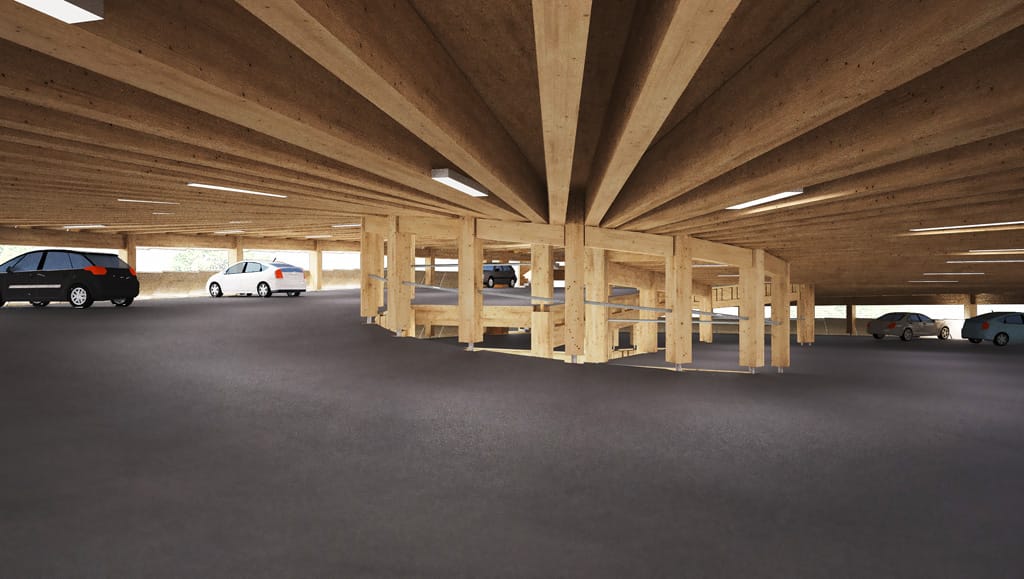
An obstacle to the construction of a multi-storey wooden parking garage in terms of fire safety is the current regulations on fire safety. The regulations allow the construction of a two-storey wooden fire class P2 parking facility based on a traditional table based engineering. In the P0 fire class, it would be possible to build even higher wooden parking garages, so the project buildings have been designed for the P0 fire class by dimensioning the load-bearing structures based on performance-based fire safety design. KK-Palokonsultti Oy’s experts believe that this development project will open a channel for change in regulations, and this simpler method of fire safety planning will also apply to multi-storey wooden parking garages in the future.
The ultimate goal of the project is to create type plans for a wooden parking garage suitable for all of Finland. The drawings should be completed during February 2021 and will be freely available to everyone in due course. 40% of the project’s funding comes from the Ministry of the Environment. No decisions have yet been made on the actual construction of wood framed parking facilities, and if one day they materialize from designers’ computer models for real buildings, it won’t happen until years from now.
The project is detailed in the article “Cities and builders draw up a type plan for a wooden parking house”, which was published on 15 January 2021 in a Finnish Building magazine. Subscribers to the magazine can read the article also online .
KK-PALOKONSULTTI OY is Finland’s leading fire safety expert firm. Good design enables savings in project costs and ensures safe implementation. The best know-how in the industry. Smooth cooperation with various parties. Competitive price level. We actively research, develop and take the industry forward.
ESPOO (headquarters)
Puh. +358 44 752 0777
KOUVOLA
Puh. +358 44 752 0777
OULU
Puh. +358 50 572 8978
TAMPERE
Puh. +358 44 700 3239
